
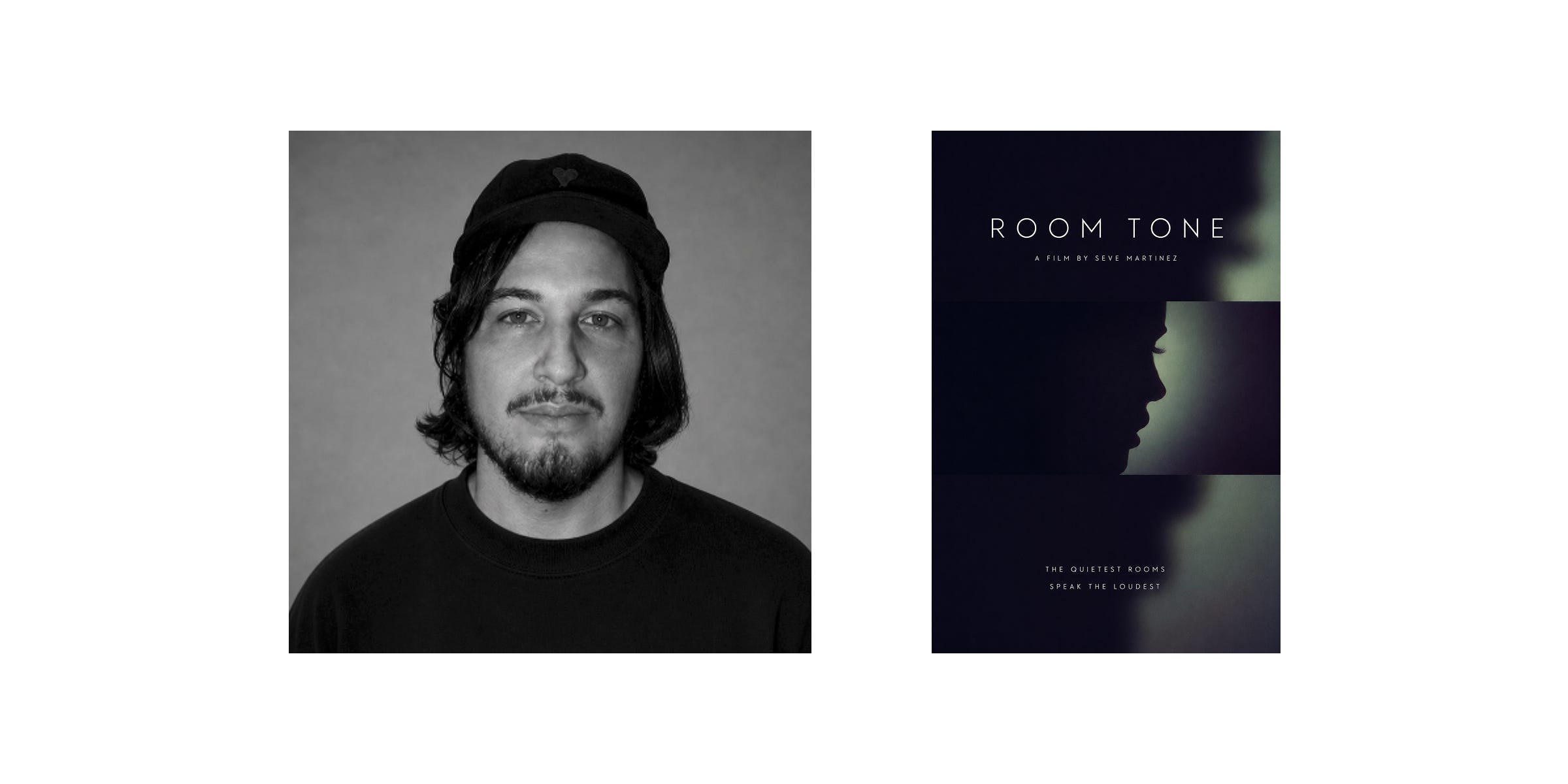
tl;dr: Director Severiano Martinez has been awarded a $15,000 grant to produce his film “Room Tone,” a chamber drama about an actress’s final session at an AI voice-cloning company. Production is expected to complete in September with a premiere this winter. Cycle 2 of svfilm.fund will reopen in the Fall.
The Creative and Technical Worlds
The technology and creative industries are two worlds that rarely talk to each other. They run on almost opposite logic. Tech runs on frameworks, abstraction, speed, and scale. The creative world runs on the human particular, the unrepeatable, slow contemplation, and complete attention to perceptive detail. One uses the cohort, the other, the singular individual. Velocity, versus waiting for “the thing” to emerge. They center in completely different geographies (SF vs LA), attract 2 completely different kinds of people, and have 2 completely different worldviews on what spending a life is for.
I spent the past decade as an engineer. Since the age of 16, I’ve been creating software, starting first with mobile development on Android, before moving to web engineering and eventually product engineering when I moved to San Francisco in late 2023. The only world I’ve ever known was the world of abstraction. Code, mathematical logic, the technically verifiable. The perceptive world, the world of felt sense, was something that was mostly invisible to me.
Studying Film
At the start of 2025, I felt something pulling at me to explore filmmaking. For a year before moving to San Francisco, I had been experimenting with creating cinematic shorts. I didn’t think much of it other than as a hobby. I became intensely interested in capturing pieces of reality and giving them a shape anyone could experience.
Coming from engineering, I struggled. Both with picking up the craft of storytelling, as well as the identity shift. Unsure what to do with me, I saw my former network of technical peers slowly fall away. I could not see it at the time, but there were 25+ invisible barriers ahead of me, or anyone attempting this transition, to overcome. I did not understand that it would be a long road (almost a year and a half of study) before I had an even basic understanding of how motion pictures worked on people.
Missing Structures
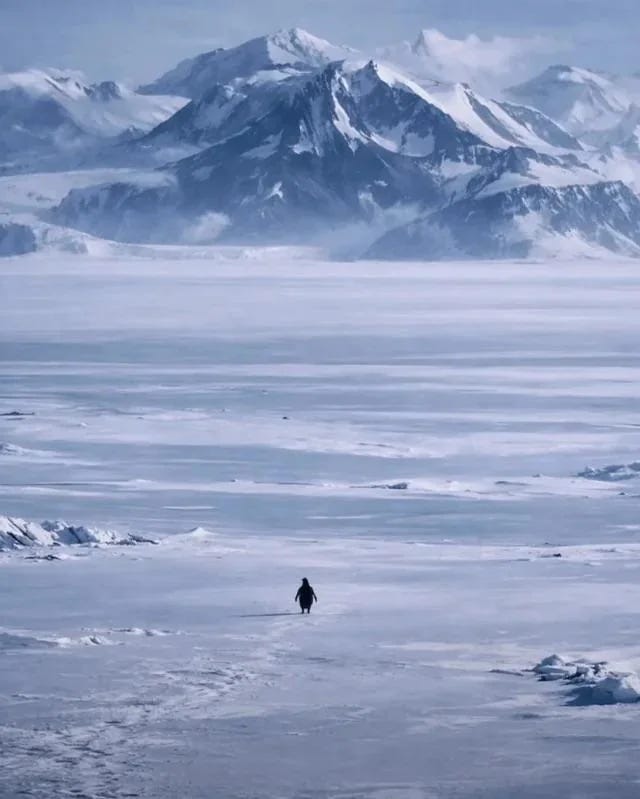
At the start of this year, I felt I was on more solid conceptual ground. Still struggling with the identity shift, I decided that there would be no other choice for me than to pursue this as my career. When I surveyed the film scene, the architecture that would make this transition more possible (peers, resources, opportunities), I found several essential pieces missing.

There was no serious space for working filmmakers in tech to meet, so I started a monthly film club. There was no development pipeline for scripted stories, so I started The Silicon Valley Film Fund. The first 2 months of the fund being open, I received no scripts, so I began writing my own. Throughout this period, still learning, acclimating, adjusting to a completely new field while building the pipes around me.
Cinema
The technology industry’s understanding of cinema, and most creative work that doesn’t contribute to product, is as a hobby (derogatory). Something completed in free time usually to signal competence or perceptive insight to go do the actual thing which is product-building. Movies are to be watched on weekends with popcorn and snacks. Recreation, leisure. This is one way to view it.
I see it differently. Cinema, the medium of sight and sound suspended in time, is the closest technological approximate in media we have to re-simulating human experience and moving it around with infinite scale. It is a permanent record of the world’s experienced understanding of a place and time.
In my original memo introducing SVFF, I cataloged the current cinematic canon defining the tech industry. The Social Network (2010) is the obvious cornerstone, with other films in loose orbit around. After a year of studying 200+ films, across eras and movements — Italian Neorealism to the French New Wave, New Hollywood to the Taiwanese New Cinema, Bresson to the Dardennes to mumblecore — I saw a massive gap in how the culture of the tech industry is represented. In fact, it’s almost entirely absent in its exact texture.
Stable References
This is a culture-scale or civilizational-scale problem, not an immediate individual problem. Quarter to quarter, year to year, in no direct way will it be apparent that the canonical film on early-stage startup life has never been made. Life will go on as it does. But something will be missing. During moments of moral crisis, private existential uncertainty, there will be no shared thing to point at that metabolizes that experience.
Films act as portals for these experiences. Stable references that a culture can gather around in conversation and contemplation. A film is more than what happens or who is in it, those are only circumstantial arrangements within the form. A viewership’s interpretations unlock an ecosystem of thought. A perpetual bridge opens for shared understanding. And the conversation lasts forever.
A film that metabolizes working class precarity? Rosetta (1999). The Dardenne brothers explore working class Belgium throughout their films (it was so influential that Belgium named a youth labor law the “Rosetta Plan” that same year). A film that metabolizes the relationship that can’t happen, real connection that arrives at the wrong time. Past Lives (2023). The full arc of ordinary life: birth, school, work, marriage, death. Yi Yi (2000).
What references does the technology industry have? Almost none. The Social Network is based in a courtroom, the films that need to exist are based in a Series B office.
SVFF
Around March, as my mental library of films grew, it became clear to me that institutional intervention was required. I was aware of only 1 film in development (Again, Tomorrow — Nikhil Ganesh, Rainbow PARC*) focusing on the culture’s interior. So I wrote a memo and posted an open call for scripts with a $15,000 grant attached.
Film as a medium has a substantial starting capital requirement. I wondered, if you removed even the start of that, who would surface with stories they were writing? I quickly found out that the answer was almost no one was writing stories from inside tech. In the first 2 months I received 1 submission that was topic-adjacent, with 13 other scripts coming in late-April and June.
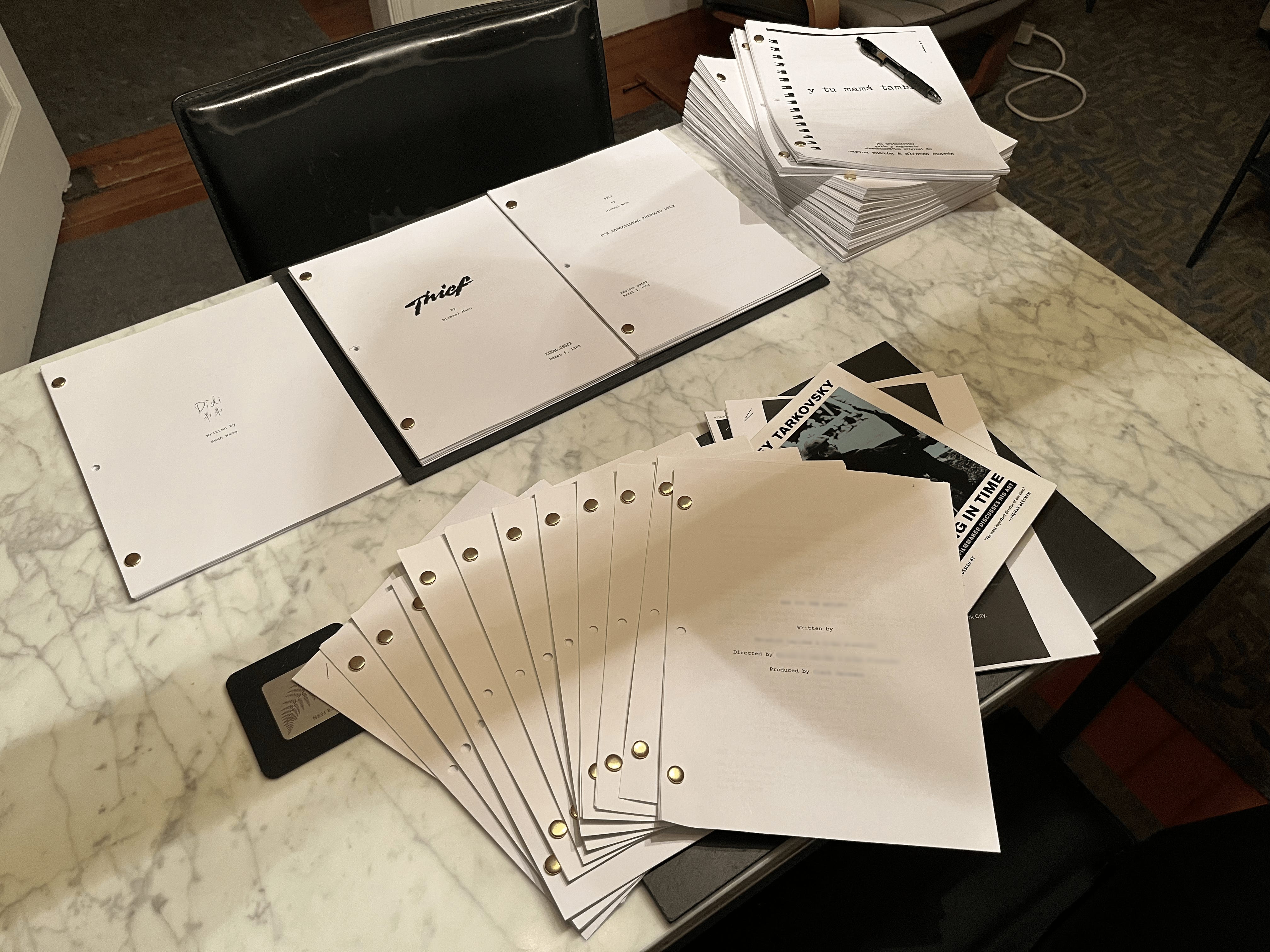
Sifting through the scripts, I was pessimistic at first. There is a structural gap where those who best understand the experience of building in tech will not have acquired the cinematic formation (which takes years to a decade) to form. And those who have the formation and craft will be too far outside the world to render it accurately. But I read every script, line for line, with full attention. Returning handwritten notes to every writer.
After 5-6 scripts my hopes were falling. Had I made a mistake? The locations were wrong, the characters weren’t fully realized, the plot mechanics were missing, the dialog stiff and typed. I kept reading, 2 writers were promising, but one script stopped me in my tracks. “Room Tone” by Severiano Martinez. By page 10 I had a slight tear. It wasn’t based in San Francisco, but the tonal register, and its exploration of tech’s implications were spot on for what I predicted was out there when I started looking in March.
Meeting Severiano
We arranged to meet at Cafe Réveille on Waller & Steiner (ol’ reliable for Lower Haight / Hayes Valley 2023 to mid-2025 twitter people). I brought my original copy with notes, and a clean copy for him. When he walked up, he surprised me with 2 copies of his own. v1.4, printed single-sided.
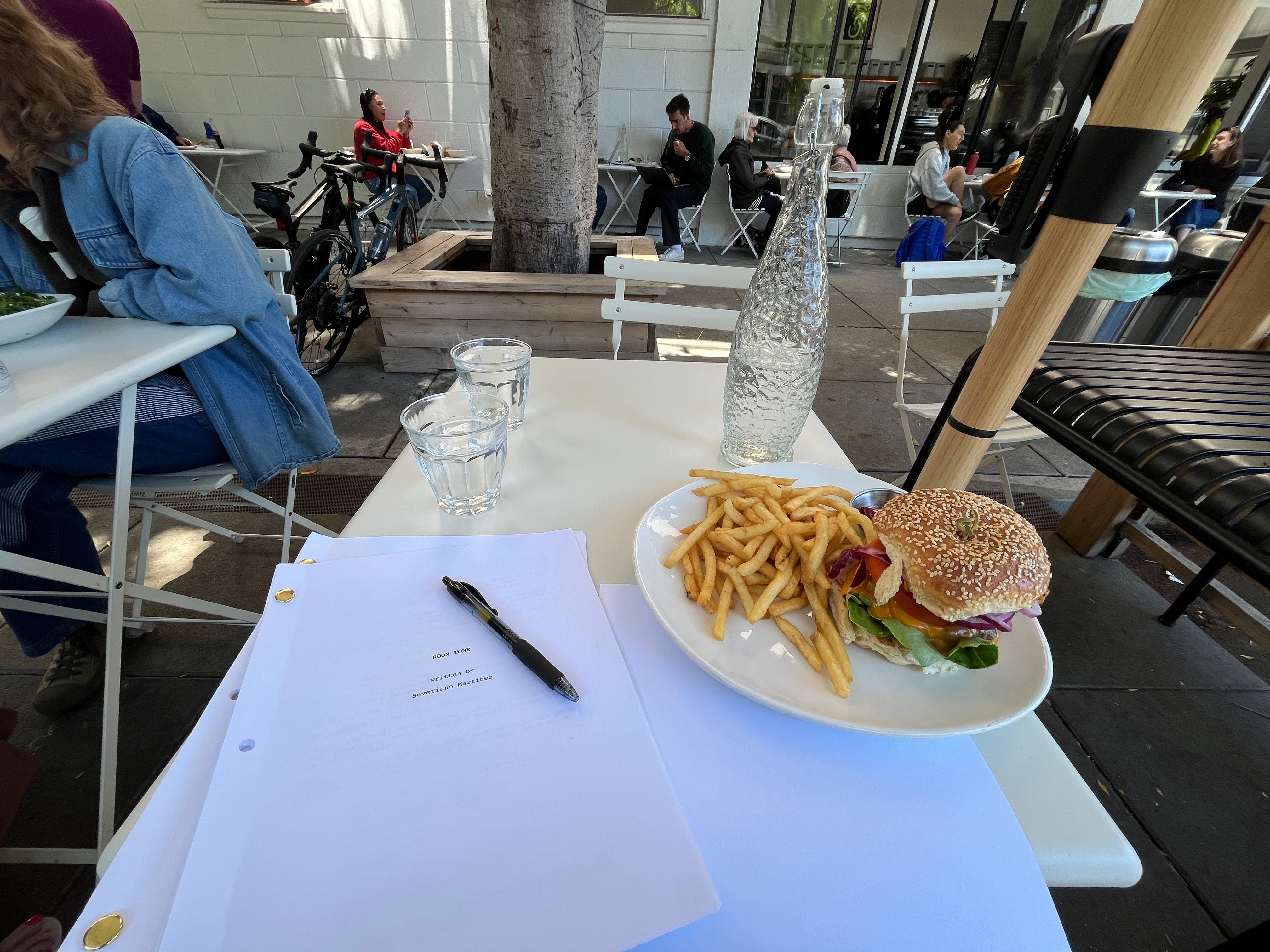
There’s an immediate connection you can feel when talking to people who straddle the gap between the technical and creative realms. Conversation can take on the form of systems and the abstract, then shift into a completely perceptive register with sentences still somehow landing, no meaning or excitement lost. We talked about the story, the characters, the location. Everything was ready to go and he knew everything he had written, beyond what I had even anticipated.
It felt like 2 separate decades were meeting in the middle, at this very specific point in time. His in the creative world: working in LA as a director and moving up to SF to work on an AI startup in voice and generative worldbuilding (VYBE Labs). Extensive production experience with tech’s abstraction mode. And mine in the technical world: a career engineer, starting various things, working a few places, before ultimately being pulled to the creative realm.
By the end of the conversation, I was confident in the material and his ability to execute it.
A Catalog in San Francisco
My longer-term vision for the fund is a catalog of films that revolve around the geography of San Francisco, exploring the tech scene from multiple angles honestly. I am also interested in tech’s implications around the world, in family life, work life, identity (Room Tone exists here), and domestic matters.
The tech industry’s current understanding of film is as marketing collateral. The launch video, the VC podcast, fireside chats, developer experience videos, event recaps, product demos. What I want to show, is that its highest use is for reshaping culture and how civilization sees itself.
Paul Thomas Anderson shaped the San Fernando Valley. Edward Yang shaped Taipei’s boom years. Ozu and postwar Japan, Satyajit Ray and Bengal, Fellini and Rome. Who is that for San Francisco tech?
On Submissions
Tech is Eating the Creative World Alive
While reading scripts, on pen and paper, it became apparent to me that I was sitting in the same geography that was trying to make the creative industry disappear. After writing about what I look for in scripts, I realized that I had just written training data that took a year of intense watching to acquire for the next big lab model. For the first time in my life I felt the visceral estrangement from tech that the creative industry is feeling.
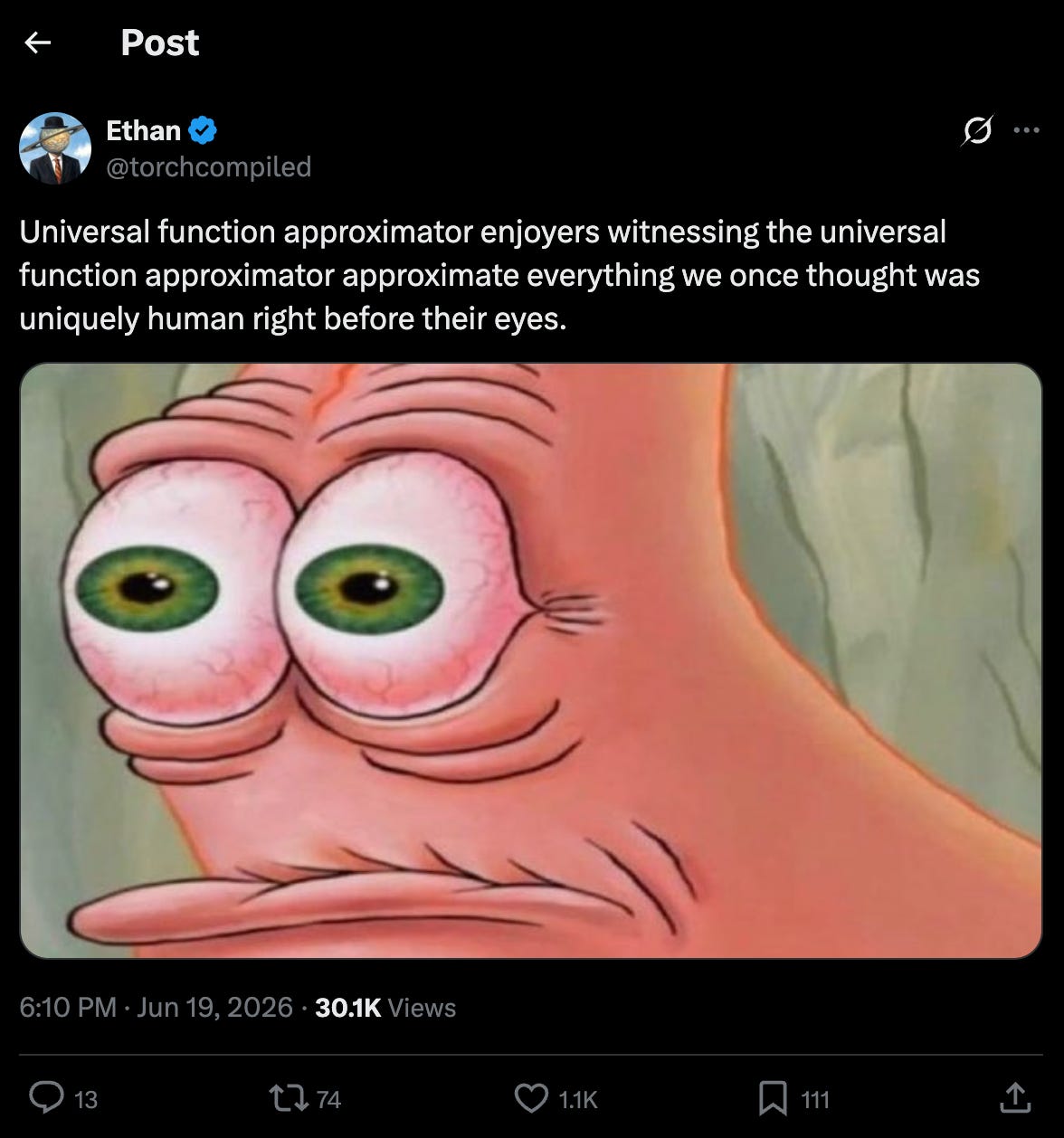
I began to ask myself what separated me, a fairly slow script reader, from an AI model that can already do a pretty good job at writing high-level script coverage? There are a lot of details on tone, performance, cast & plot architecture, and formatting a model might miss. A reader might have an awareness of the current cultural climate, memories of a specific geography and time. But these are all data problems that can be worked around.

Only original stories in the long tail will survive. Human fingerprints on them, personal stakes attached, director Q&A after. Selection will remain a bottleneck, a script reader/writer will need to know what’s good, and that only comes from reading hundreds of scripts and watching thousands of films. I never thought of it this critically, but the fund exists to fund just that. Stories on tech where the author is the only one who could have written it.
Submission Review
I want to encourage more writers in San Francisco to write these stories. If I could fund 4 films per cycle and had the funding, I would. But few are writing them, and the scripts that do exist aren’t yet ready for production. The infrastructure to develop them is nascent and proving itself.
Of the stories that were submitted (14), I found that…
Overall
Nearly every script was not ready for production, most reading as rough first drafts. Many shared anxieties about AI eating creative/knowledge work. 1 script was essentially ready to be shot (Room Tone), with 2 other writers who are early but very promising. Only 3 scripts were in SF proper (2 loosely indicated it, but were not direct). Only 1 script featured an entire cast of startup founders (other scripts adjacent, less focused).
Overwhelmingly scripts contained dense action lines, literary dialog, and 1-dimensional plot lines (axis of conflict). Generally, underrealized in the cinematic form. Dialog containing technical details struggled. AI was consistently an antagonizing force. A common failure mode was carrying too much drama through screens (Slack messages). A few scripts were complete outsider thriller narratives with no concrete grounding in SF.
Frontier labs are entirely absent. Research is almost entirely absent (other than 1 script with a few researchers).
Looking Forward
The goal of the fund is to offer a development pipeline for writers to take their stories from drafts to ready for production. Everything is so early right now that I am learning alongside the same writers I am reviewing submissions of. This first batch had a thematic focus of exploring AI’s implications on replacing creative work. I hope to see a wider set of themes in future cycles.
I am vigilant to keep a healthy mix of themes. I am also keen on staying anchored to the SF geography + characters (tech founders, early-stage, VCs, etc). I am not interested in the satirical register. I am looking for the sincere, grounded, restrained, and observational.
I hope more writers surface in the coming months and years as the fund progresses. It is incredibly early.
Cycle 2 will reopen in the Fall, scripts@svfilm.fund will remain open for submission.